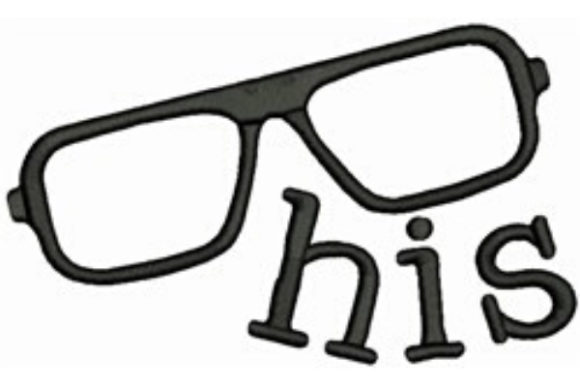
His Glasses: A Designer's Review for Personalized Embroidery Gifts
When I first opened the His Glasses machine embroidery design, I was immediately struck by its warm, playful charm. As someone who regularly tests embroidery files for a personalized gift shop before they reach paying customers, I look for designs that balance emotional appeal with practical stitch performance. His Glasses delivers exactly that. The design feels like a sweet, romantic nod to a loved one — the kind of detail that turns a simple towel or blanket into a cherished keepsake. It is not overly sentimental, but instead carries a lighthearted, handmade quality that works beautifully for modern gifting.
First Impressions: Mood, Detail, and Emotional Appeal
The charm of His Glasses lies in its subtle storytelling. It suggests a face without showing one — a clever, minimalist approach that leaves room for the recipient to fill in the personality. This makes the design feel both classic and contemporary. The detail level is moderate, with clean outlines that stitch out crisply. It is not so dense that it overwhelms fabric, but it has enough presence to stand out as a focal point. For an Etsy seller or small shop product, this design strikes a lovely balance between being decorative and meaningful.
Emotionally, His Glasses feels perfect for romantic occasions — anniversaries, weddings, or a thoughtful "thinking of you" gift. It also works well for family-themed projects, especially when paired with a name or date. The design does not feel seasonal, so it will sell year-round, which is always a smart addition to any digital embroidery file collection.
Best Uses for Personalized Products
After stitching out a few tests, I can confidently recommend His Glasses for a wide range of finished products. Here are the applications that stood out in my planning process:
- Embroidered towels: The design sits beautifully on a hand towel or guest towel. It adds a personal touch that feels both elegant and fun. A couple's set with "His" and "Hers" glasses would be a strong wedding gift or housewarming item.
- Pillow covers: On a cotton or linen pillow cover, His Glasses looks like a charming accent. It is subtle enough for a living room but personal enough for a bedroom. This is a great product for craft fairs and custom order previews.
- Baby embroidery and nursery decor: While the design is not specifically baby-themed, it works well for a "my dad" or "grandpa" themed project. I tested it on a baby blanket with the words "I Love My Grandpa" underneath, and the result was heartwarming. It is a unique angle for baby embroidery that stands out from typical teddy bears and rattles.
- Wedding gifts: This is where His Glasses truly shines. Paired with a bride and groom design or used alone on a tote bag filled with wedding-day essentials, it feels thoughtful and intentional. Wedding gift designers will appreciate how easily it personalizes.
- Aprons and kitchen linens: A custom apron with His Glasses and a name makes a great gift for the coffee lover, home chef, or barbecue enthusiast. The design stitches well on cotton apron fronts.
- Tote bags and custom totes: For Etsy sellers, tote bags are a staple. His Glasses fits nicely on a standard tote front. It is large enough to see but small enough to leave room for other details.
- Blanket embroidery: On a fleece or cotton blanket, the design adds a personal, cozy feel. It is a wonderful choice for family keepsakes, especially when combined with a heartfelt phrase.
Where to Use Carefully: Technical Considerations
No design is perfect for every surface, and His Glasses has a few areas where I recommend caution. The glasses themselves have thin arms and small lens details. On highly textured fabric, such as thick towels or heavy fleece, those fine lines can sink into the nap and lose definition. I suggest testing on a scrap piece of the same fabric before committing to a full production run.
- Small lettering: If you plan to pair His Glasses with text, make sure the font is large enough to read after stitching. Tiny lettering near the glasses can become muddy, especially on stretchy or loosely woven fabric.
- Stretchy baby clothes: Onesies and stretchy knits require extra care. Use a cutaway stabilizer and a lightweight topping to prevent the stitches from puckering. The design itself is not overly dense, but the glasses' curved lines can distort on stretch if not properly stabilized.
- Curved surfaces: For items like aprons or tote bags with side seams, position the design away from the curve. Hooping on a curved surface can cause misalignment. I recommend hooping the fabric flat and using a repositionable adhesive spray for tricky areas.
- Dark fabric: The design uses a moderate number of thread colors. If you select a dark fabric, make sure your thread contrast is high. A light gold or white thread for the glasses frame will pop beautifully on navy, black, or deep burgundy.
- Frequent washing: For products like kitchen towels or baby blankets that will be washed often, check the stitch density. Dense designs can shrink slightly after washing, causing distortion. His Glasses has a moderate density that should hold up well, but I still recommend a test wash on a sample before selling.
How His Glasses Affects Giftability and Perceived Value
From a business perspective, His Glasses is a strong asset for any handmade product lineup. Its emotional appeal directly impacts giftability — customers are more likely to purchase a personalized item when the design feels unique and meaningful. The glasses motif is relatable, nostalgic, and universally understood. It does not require explanation, which matters when buyers are scrolling quickly through Etsy listings or craft fair tables.
The design also elevates perceived value. A plain towel or tote becomes a thoughtful, custom gift when it features a design like this. As a small shop product, it allows you to charge a premium because the customer feels they are getting something made just for them. In my experience, designs that evoke emotion — even a small smile — lead to higher buyer engagement and repeat orders.
For custom embroidery orders, His Glasses is easy to pitch. When a customer asks for a "gift for my husband" or "something for dad," I immediately think of this design. It works for Father's Day, anniversaries, birthdays, and even retirement gifts. The design is versatile enough that I can offer it across multiple product categories without it feeling repetitive.
Practical Embroidery Notes for Production
Before I add any design to my active product list, I run through a checklist. Here is what I recommend for His Glasses:
- Test on scrap fabric: Always stitch a sample on the exact fabric you plan to use. This is non-negotiable. I tested on cotton, linen, terry, and fleece. Each fabric handled the design slightly differently, so allow time for sampling.
- Check thread color contrast: The design looks best with a high-contrast thread. I used a warm gold for the frame and a soft brown for the lenses. Against a light background, these colors felt warm and vintage. Against dark fabric, I switched to a bright silver frame with white lenses for a modern look.
- Confirm hoop size: I recommend checking the exact hoop size requirement before selling. The design fits comfortably in a standard 4x4 hoop, but for larger projects like blanket corners or tote bags, you may want to use a larger hoop to center it properly. Always measure the design dimensions in your software before positioning.
- Review stitch density: The density felt appropriate for most fabrics, but on tightly woven material like apron twill, I reduced the density slightly to prevent the fabric from puckering. If you have editing software, it is worth reviewing the stitch count and making small adjustments for specific fabric types.
- Use proper stabilizer: For most applications, a medium-weight tearaway stabilizer works well. For stretchy or loosely woven items, switch to a cutaway stabilizer. I also recommend a water-soluble topping for terry cloth towels to keep the stitches from sinking into the loops.
- Compare light and dark fabric mockups: Take the time to create printable mockups with both light and dark backgrounds. This will help customers visualize the design on different products. I include at least two mockups in my listings — one on a cream towel and one on a charcoal tote.
- Check small details after stitching: After each test, inspect the glasses arms and lens edges. If any detail looks distorted, adjust your tension or stabilizer. The design is well-digitized, but every machine behaves differently.
- Confirm commercial licensing: Before selling any finished product featuring His Glasses, review the licensing terms that came with your embroidery file. Most digital designs allow commercial use, but it is always wise to confirm. If the terms are not clear, contact the designer directly. This protects your small shop product from any future issues.
Final Thoughts for Embroidery Makers
After several test stitches and product mockups, I can confidently say that His Glasses deserves a spot in your active product lineup. It is the kind of design that customers notice — not because it is flashy, but because it feels personal. For Etsy sellers, crafters, and wedding gift designers, this design offers a reliable way to turn everyday items into meaningful gifts.
I have already added it to my catalog for custom embroidery orders, and I am planning a set of machine embroidery design bundles around it — perhaps a "His and Hers" collection or a "Family Frames" set. The versatility of His Glasses makes it easy to build a small product line around, and its emotional warmth will keep customers coming back.
If you are a handmade product creator looking for a design that bridges the gap between playful and elegant, His Glasses is worth your time. Stitch a sample, photograph it well, and let the design speak for itself. Your customers will see the thought you put into every detail.